
A fireplace in the living room, whether open or closed, looks very good. But just as fireplaces look different, their functions also vary. You can use a fireplace to keep your living room warm, connect it to a water heater, heat your entire house, or just watch the flames. In general, every fireplace needs a smoke vent. A fireplace without a chimney is not a fireplace.
Glass fireplace
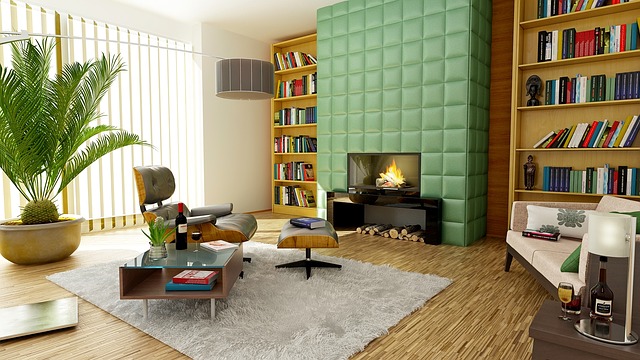
The more you can see of the fire, the higher the comfort factor. That\’s why a fireplace with a large glass surface is more comfortable than a fireplace with a small peephole. The most pleasant effect is achieved by a fireplace that is glazed on three sides (with special glass in the form of glass ceramics) – here the flames look like a campfire. Tip: if the windows on the fireplace do not have a visible handle, the fire in the fireplace is even more authentic, almost as if it were an open fire.
Suspended fireplace
The suspended fireplace originated in Scandinavia. Advantages: the fire in this fireplace can be placed higher in the room, reducing the risk of burns for children and animals. Another plus: free space around the fireplace. It does not have to stand in a corner, but can be suspended in the center and radiate heat all around. In addition, this fireplace is easy on your back—you can forget about kneeling to burn and clean it.
Danish stove
The Danish fireplace has become a classic over the years. It is a further development of the classic fireplace, which is equipped with a larger view—creating more comfort. In addition, the fireplace has modern technology, a self-closing door, and a combustion chamber, which increases efficiency.
Danish fireplaces are not built-in. Tip: with this fireplace, make sure you have the right temperature control. There is often a risk of overheating because the fireplace is simply oversized. Danish fireplaces are also available for rooms with low heating requirements.
Stoves and fireplaces as a heating system
Modern houses use fireplaces not only to heat the living room. The fireplace also does its job and heats the whole house fairly. Various systems are available for this purpose, but in addition to a chimney, they require special cables, pipes, and energy supply systems.
1. Gas fireplace
A gas fireplace is a refined heating system that still looks like a cozy fireplace. Behind the facade of the fireplace is a sophisticated ventilation system. And it can definitely heat the entire house.
Gas has even more advantages: both the fireplace and the air remain clean. Gas produces virtually no fine dust, and its efficiency is impressive—at least 70 percent for this type of fireplace. Gas fireplaces are powered by both natural gas and propane.
2. Pellet stoves – heat with pellets instead of wood
Pellet fireplaces are suitable for energy-efficient or low-energy houses. Wood pellets are made from wood waste such as sawdust. Advantage: they have higher efficiency. The fireplace burns longer than if it were filled with the same amount of wood. If the fireplace is to heat the entire house, it must be connected to hot water. Disadvantage: installation is complicated and such a fireplace is more like a stove and is often not designed for sitting by the fire. In addition, a fireplace with this function usually has a smaller front glass than conventional wood-burning fireplaces. Advantage: a fireplace that heats the entire house protects the environment and the household budget.